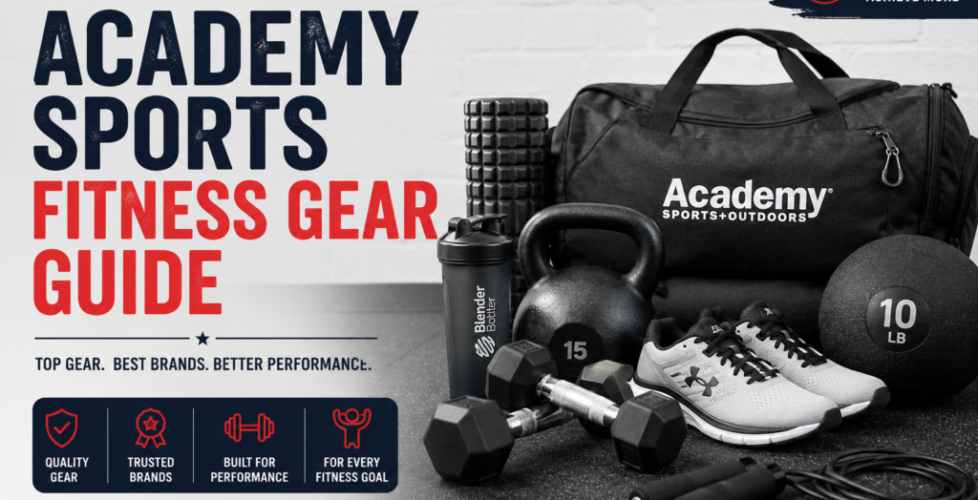
Academy Sports Fitness Gear Guide: Best Equipment for Every Goal
Why the Academy Sports Fitness Gear Guide Matters
Hundreds of products compete for your attention, and not all of them are worth your money. The Academy Sports Fitness Gear Guide exists to cut through the noise. It gives you a clear, experience-backed roadmap so you can shop with confidence, train with purpose, and see real results faster.
This guide draws on real training experience and consumer research across all major gear categories. Whether you are setting up your first home gym or upgrading an existing setup, the Academy Sports Fitness Gear Guide walks you through every decision from cardio machines and strength tools to wearable tech, footwear, and recovery accessories. Every recommendation is practical, budget-conscious, and grounded in what actually works.
Read on to discover how the right gear transforms your training, why experience matters more than marketing claims, and how you can build a smarter fitness setup no matter your budget.
Academy Sports Fitness Gear Guide: Quick Reference Table
The table below gives you an at-a-glance comparison of every major gear category, its ideal use case, the top product type to consider, and the single most important buying factor to evaluate.
| Gear Category | Best For | Top Pick Type | Key Buying Factor |
| Cardio Equipment | Weight Loss & Endurance | Treadmill / Stationary Bike | Incline settings, cushioned deck, heart rate monitor |
| Strength Training | Muscle Building & Power | Adjustable Dumbbells / Barbell | Weight range, grip quality, durability |
| Resistance Training | Flexibility & Rehab | Resistance Bands / Cable System | Resistance levels, portability, anchor options |
| Wearable Technology | Goal Tracking & Analytics | Fitness Tracker / Smartwatch | Battery life, GPS accuracy, water resistance |
| Athletic Footwear | Performance & Injury Prevention | Activity-Specific Shoes | Arch support, heel drop, toe box width |
| Recovery Tools | Soreness Relief & Healing | Foam Roller / Massage Gun | Density, vibration intensity, portability |
Use this table as your starting point. Then read the detailed sections below to understand exactly why each factor matters and how to evaluate it when you shop.
Define Your Goals Before You Buy Any Gear
Every experienced trainer will tell you the same thing: your goals determine your gear, not the other way around. The Academy Sports Fitness Gear Guide places goal-setting at the very top of the process for this exact reason. Buying equipment without a clear objective is one of the most common and costly mistakes beginners make.
Ask yourself three questions before spending a single dollar. First, what is your primary fitness objective: weight loss, muscle gain, endurance, flexibility, or general health? Second,what is your realistic weekly training commitment? Your answers to these questions will immediately narrow down the categories and products that actually deserve your attention.
For example, a person focused on losing weight and improving heart health should prioritize cardio equipment above all else. Someone who wants to build muscle needs free weights, a bench, and ideally a cable system. A person recovering from a knee injury may benefit most from low-impact cardio and targeted recovery tools. The Academy Sports Fitness Gear Guide is built around this goal-first philosophy because it produces better outcomes every single time.
Cardio Equipment: The Academy Sports Fitness Gear Guide Breakdown
Treadmills and Stationary Bikes
Treadmills remain the most popular choice because they replicate natural walking and running movements. When evaluating a treadmill, pay attention to the motor horsepower, belt size, incline range, and cushioning system. A wider belt and a robust motor make a significant difference in long-term comfort and durability.
Stationary bikes are an excellent low-impact alternative, especially for people with joint sensitivity. Upright bikes closely mimic outdoor cycling. Recumbent bikes offer additional back support and are ideal for older adults or those in rehabilitation. Spin bikes deliver an intense, high-energy workout suited to interval training and group fitness environments.
Rowing Machines and Ellipticals
Rowing machines deliver one of the most complete workouts available in a single piece of equipment. They engage the legs, core, back, and arms simultaneously, making them exceptionally time-efficient. Studies consistently show that rowing at moderate intensity burns between 400 and 600 calories per hour while building functional strength across the entire body.
Elliptical trainers bridge the gap between running and cycling. They provide a full-body, low-impact cardio session that is easy on the knees, hips, and ankles. Many models include moving handlebars that activate the upper body, increasing total calorie burn without adding joint stress. The Academy Sports Fitness Gear Guide rates ellipticals among the top three home gym investments for their versatility and accessibility.
please share your sites guest post exchange
Strength Training Gear: Build Muscle the Right Way
Free Weights and Dumbbells
Free weights are the cornerstone of any strength training program. Dumbbells, in particular, offer unmatched versatility. You can use them for dozens of exercises that target every major muscle group, from chest and back to shoulders, arms, and legs. Adjustable dumbbells are the smartest investment for home gym users because a single pair replaces an entire rack of fixed-weight options, saving both money and floor space.
If you are serious about building significant strength and muscle, a barbell and weight plates are non-negotiable. Compound movements like squats, deadlifts, bench presses, and bent-over rows are among the most effective exercises ever developed. They recruit multiple muscle groups at once, stimulate maximum hormonal response, and build functional strength that carries over into daily life.
Resistance Bands and Cable Systems
Resistance bands are frequently underestimated, but experienced trainers use them consistently for good reason. They provide constant tension throughout the entire range of motion, which challenges the muscles differently from free weights. Bands are also incredibly portable, inexpensive, and suitable for rehabilitation, warm-ups, and accessory work alongside heavier training.
Cable systems take resistance training to the next level by allowing an almost unlimited variety of movement angles and exercise variations. They are particularly effective for targeting smaller stabilizer muscles and isolating specific areas of the body with precision. If your budget allows for one significant equipment upgrade, a functional trainer or cable pulley system is one of the highest-value additions you can make.
Wearable Technology: Train Smarter with Real-Time Data
Modern fitness is increasingly data-driven, and wearable technology sits at the center of this shift. Fitness trackers and smartwatches give you real-time insight into your body’s performance, recovery status, and long-term trends. The Academy Sports Fitness Gear Guide treats wearables as essential tools rather than optional accessories, because the data they provide directly improves training decisions.
Entry-level fitness trackers monitor steps, heart rate, and sleep quality. Mid-range devices add GPS tracking, workout detection, and stress monitoring. Premium smartwatches include electrocardiogram readings, blood oxygen saturation levels, and advanced recovery metrics like HRV (heart rate variability).The right device for you depends on how deeply you want to engage with your training data.
Battery life and water resistance are the two most practical factors to evaluate before purchase. A tracker that needs charging every day creates friction in your routine. Look for models offering at least five to seven days of battery life, and always choose a device rated waterproof enough for your most intense sweating or swimming activities.
Athletic Apparel and Footwear: Performance Starts Before You Train
Choosing the Right Athletic Shoes
Footwear is arguably the most important gear decision any fitness enthusiast makes. The wrong shoes cause discomfort, alter your movement mechanics, and significantly increase injury risk over time. Running shoes prioritize forward-motion cushioning and heel-to-toe energy transfer. Cross-trainers are built for lateral agility and multi-directional movement. Weightlifting shoes feature a raised, rigid heel that improves squat depth and barbell positioning.
Always try shoes at the end of the day when your feet are slightly swollen from activity. This gives you a more accurate sense of the fit under real training conditions. Pay attention to toe box width, especially if you have wider feet. A shoe that pinches the toes restricts natural foot movement and leads to blisters, black toenails, and long-term structural issues.
Performance Apparel and Compression Wear
Athletic clothing does far more than make you look the part. Moisture-wicking fabrics pull sweat away from the skin, regulate body temperature, and prevent chafing during long training sessions. Compression garments improve blood circulation to active muscles, reduce vibration-related fatigue, and can measurably decrease muscle soreness in the 24 to 48 hours following intense exercise.
Invest in two or three sets of quality athletic clothing rather than buying many cheap sets. Quality fabrics retain their performance properties through hundreds of wash cycles. Cheap alternatives lose their shape, stretch out, and stop wicking moisture within a few months. This is one area where spending slightly more upfront saves money in the long run.
Recovery Gear: The Academy Sports Fitness Gear Guide’s Most Overlooked Category
Most fitness enthusiasts focus almost entirely on the workout and give almost no thought to recovery. This is a significant mistake that limits progress and increases injury risk. Muscles do not grow during exercise. They grow during rest and recovery, when the body repairs the micro-tears created by training. Without proper recovery, even the most disciplined training program eventually leads to stagnation, overtraining, and burnout.
Foam rollers are the most cost-effective recovery tool available. Consistent use breaks up adhesions in the fascia, improves tissue quality, increases joint mobility, and reduces delayed onset muscle soreness by up to 30 percent in regular users. Use a foam roller before training to activate muscles and after training to flush out metabolic waste and begin the repair process.
Massage guns have become a popular complement to foam rolling because they deliver targeted deep-tissue relief more precisely and conveniently. Compression sleeves for knees, elbows, and ankles reduce inflammation and support joint health during and after training. Stretching straps allow you to deepen static stretches safely, improving flexibility over time without risk of strain. Every serious training program should include a dedicated recovery protocol.
Budget Planning: Building a Smart Fitness Setup at Any Price Point
One of the most valuable services the Academy Sports Fitness Gear Guide provides is honest, experience-based budget guidance. You do not need to spend thousands of dollars to build an effective fitness setup. A thoughtfully assembled starter kit can cost less than three hundred dollars and deliver everything you need to make consistent, measurable progress for years.
Start with the essentials that match your primary goal. A pair of adjustable dumbbells, a set of resistance bands, a quality yoga mat, and a reliable pair of activity-appropriate shoes form an excellent foundation for most beginners. These four purchases provide the tools for hundreds of different exercises covering strength, cardio, flexibility, and mobility.
As your fitness level advances and your goals become more specific, add equipment strategically. Look for seasonal sales events, open-box deals on larger machines, and bundle offers that include multiple items at reduced prices. Prioritize quality over quantity at every price point. A single excellent piece of equipment that lasts ten years is always a better investment than three cheap items that break or disappoint within a year.
Conclusion: The Academy Sports Fitness Gear Guide Sets You Up for Success
Reaching your fitness goals becomes significantly easier when you have reliable information and the right tools. The Academy Sports Fitness Gear Guide is designed to give you both. From cardio machines and strength equipment to wearables, apparel, and recovery tools, every major gear category has been covered with honest, experience-based insights that help you make smarter purchasing decisions.
Remember that the best fitness gear is not always the most expensive. It is the gear that aligns with your specific goals, fits your lifestyle, and motivates you to show up consistently. Use the Academy Sports Fitness Gear Guide as your trusted reference every time you evaluate a new product or expand your training setup. Train smart, recover intentionally, and enjoy the journey of becoming a stronger, healthier version of yourself.
Frequently Asked Questions (FAQs)
1: What is the Academy Sports Fitness Gear Guide and who is it for?
The Academy Sports Fitness Gear Guide is a comprehensive, experience-based resource designed to help fitness enthusiasts at every level choose the right equipment for their specific goals. It is equally useful for complete beginners who have never purchased fitness gear before and for experienced athletes looking to upgrade their current setup.
2: How does the Academy Sports Fitness Gear Guide help beginners avoid common mistakes?
The Academy Sports Fitness Gear Guide helps beginners by teaching the goal-first approach to gear selection. Rather than recommending specific products immediately, the guide starts by asking beginners to define their primary fitness objective, their available training space, and their realistic weekly commitment.
3: What types of fitness gear does the Academy Sports Fitness Gear Guide recommend for home gyms?
For home gym setups, the Academy Sports Fitness Gear Guide recommends starting with a foundation of four essential items: adjustable dumbbells, resistance bands, a quality yoga or exercise mat, and a pair of activity-appropriate athletic shoes. These four purchases provide access to hundreds of exercises covering strength training, cardio conditioning, flexibility work, and mobility improvement.
4: Does the Academy Sports Fitness Gear Guide cover recovery tools?
Yes.The Academy Sports Fitness Gear Guide dedicates a full section to recovery tools because recovery is considered just as important as the workout itself. Muscles repair and grow during rest, not during training, which means recovery directly determines how fast you progress.
5: How does the Academy Sports Fitness Gear Guide approach budget planning?
The Academy Sports Fitness Gear Guide approaches budget planning with honesty and practicality. It makes clear that you do not need a large budget to build an effective fitness setup. A beginner kit consisting of adjustable dumbbells, resistance bands, a yoga mat, and quality shoes can cost under three hundred dollars and support years of consistent, progressive training.