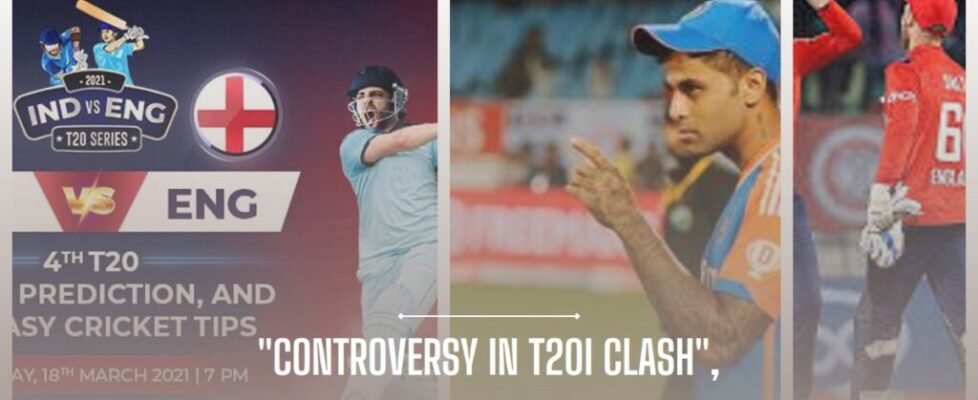
India vs England: Controversy Overshadows 4th T20I

India vs England, The 4th T20I between India and England in Pune was a thrilling match. It was full of drama, controversy, and game-changing performances. With India leading the series, England fought to stay in it. A controversy arose when Harshit Rana, a substitute for Shivam Dube, took a crucial wicket. This left the English camp fuming. This match was a wild ride for both teams. It had great performances, strategic fights, and some controversy, too.

England’s fiery start and India’s spin fightback

In chasing a target of 182, England started fast. Phil Salt and Ben Duckett hammered India’s pacers early on. The pair put up a 50-run partnership in five overs, showing their intent to dominate. Yet, India’s spinners soon pulled the momentum back in the hosts’ favor.

Ravi Bishnoi took the first wicket by dismissing Duckett on the last ball of the powerplay. Axar Patel then removed Salt in the next over.

India’s bowlers, despite England’s strong start, challenged the visitors in the middle overs. The spin duo of Bishnoi and Axar choked the run flow, and wickets at regular intervals kept India in the hunt.

Harshit Rana’s concussion substitute controversy

A key match topic arose when Shivam Dube had to leave due to a concussion. He had played a crucial role in India’s batting recovery. India named Harshit Rana as his substitute. He immediately harmed the game by dismissing Liam Livingstone.

This upset the England camp, especially Jos Buttler. They questioned the justification of Rana’s inclusion under the concussion protocol. The rules allow for a like-for-like replacement. But Dube is an all-rounder and Rana a specialist pacer. England felt they had been hard done by. The controversy added an extra layer of intensity to an already dramatic match.

India’s batting struggles and Pandya-Dube’s heroics.

India’s innings started in disaster. England’s Saqib Mahmood ripped through their top order with a stunning first over. Sanju Samson and Tilak Varma fell to consecutive balls. Suryakumar Yadav also departed in the same over. India was in deep trouble at 3 wickets down for almost no runs.

Yet, Hardik Pandya and Shivam Dube staged a remarkable fightback. Pandya, a power-hitter, scored a fifty in 27 balls. He was key in rescuing India’s innings. Dube complemented him in a way that showcased their compatibility. He accelerated at the end and made a fine fifty. Their partnership led India to a respectable 181/9 in 20 overs. At one point, that seemed unlikely.

Axar Patel, Rinku Singh, and Arshdeep Singh added key runs in the death overs. These runs later proved crucial to the result.

India vs England, Dominance in the middle overs

England’s approach to the chase was clear: go hard in the powerplay and take advantage of any loose bowling. They achieved success at the beginning. Salt and Duckett tore into the Indian pacers. But India’s spinners once again demonstrated their ability to control the game.

Duckett and Salt’s wickets stopped England’s progress. Then Buttler got out, and England’s hopes began to fade.

Axar Patel and Bishnoi took control of the middle overs. They bowled tight lines and took key wickets. England’s middle order struggled to gain momentum. As the required run rate rose, the pressure became too much.

The Dew Factor and Pitch Conditions

Before the match, there were discussions about how the dew factor might impact the game. Yet, the Pune surface remained balanced, allowing spinners to have a say in both innings. India’s choice to use a spin-heavy attack paid off. They imposed effective restrictions on England during the chase.

The pitch report suggested a high-scoring game. So, India’s 181/9 total seemed a bit low at first. But, as the match went on, it became clear that run-making required more effort than it first seemed.

Series Context and England’s Fightback in the Tournament

Before this match, England felt confident. They won the third T20I, which kept their hopes alive in the series. In past matches, their bowlers, led by Adil Rashid and Saqib Mahmood, had pressured India’s batsmen.

India, yet, had struggled with inconsistency in their batting order. The top-order failures worried the coaching staff. This match showed their weakness against strong pace attacks again.

Final Moments and India’s Victory

As the match approached its climax, England needed a late push to pull off the chase. Yet, with wickets falling regularly, the task became more and more difficult. Harshit Rana’s breakthrough further dented England’s chances. India sealed the match with a dominant bowling display in the final overs.

India’s win gave them a strong lead in the series. Now, England must bounce back in the final T20I.

Looking Ahead: What’s Next for Both Teams?

The win boosts India, but concerns about their top order remain. The middle order, led by Pandya and Dube, showed resilience. But they must fix the early collapses before the final match.

England, but will be ruing the missed opportunity. Their fast bowlers did well at first. But the middle order failed to capitalize on the strong start. This cost them the game. The team will discuss the debate over Harshit Rana’s substitution after the match.

With one match left in the series, both teams will adjust. India will aim to finish strong. England will hope to level the series and gain momentum for their next matches.

The 4th T20I had it all: explosive batting, skillful bowling, and tactical battles. It even had some off-field controversy. That’s what makes this format thrilling. As the dust settles on this match, all eyes turn to the series’ final game. England will try to bounce back, and India will seek to assert their dominance again.