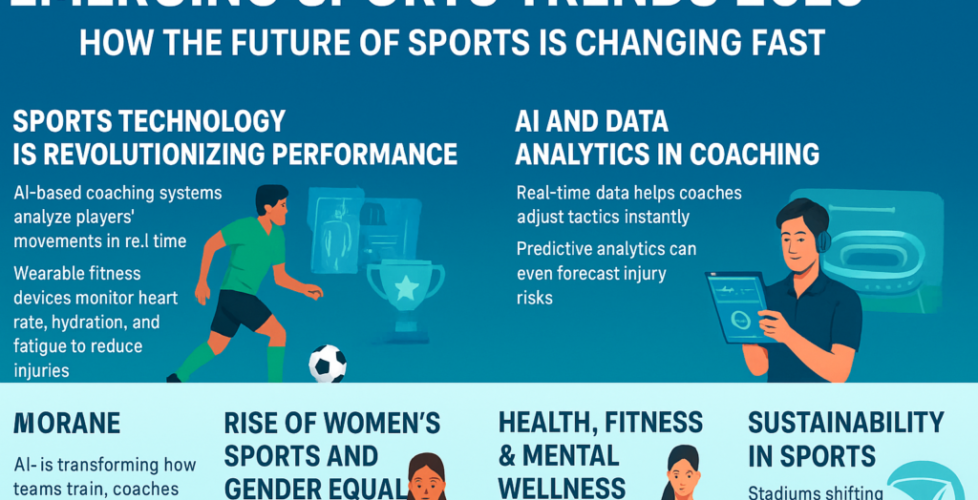
Emerging Sports Trends 2025—How the Future of Sports Is Changing Fast
Introduction of Emerging Sports Trends 2025
Emerging Sports Trends 2025, The sports world in 2025 is undergoing a remarkable transformation. Innovation, technology, and social progress are reshaping how athletes train, how fans engage, and how organizations operate. From artificial intelligence and wearable technology to the explosive rise of eSports and the global movement for gender equality, sports today are more data-driven, inclusive, and immersive than ever before.
Whether you are an athlete, a coach, or a passionate fan, understanding these emerging sports trends will help you stay ahead in a world where performance and experience are evolving every second.
1. Sports Technology Is Revolutionizing Performance
Technology has become the backbone of modern sports, redefining athletic performance and fan engagement.
In 2025, AI-based coaching systems and advanced analytics tools help players and coaches make data-informed decisions in real time. Wearable technology tracks every heartbeat, movement, and hydration level to prevent injuries and optimize training sessions.
Smart stadiums have also become the new norm. Powered by 5G connectivity and augmented reality (AR), these venues deliver an immersive viewing experience where fans can access real-time stats, replay highlights from any angle, and even interact with players virtually.
Example: Teams like the Los Angeles Rams in the NFL and Manchester City in the Premier League are using AI-driven motion tracking systems to enhance player performance and reduce the risk of fatigue-related injuries.
2. eSports: From Gaming to a Billion-Dollar Sport
eSports has officially entered the mainstream. Once dismissed as a pastime for gamers, it has now grown into a billion-dollar global industry with professional leagues, sponsorships, and live events that rival traditional sports.
In 2025, tournaments such as the Valorant Champions Tour and the Fortnite World Cup attract millions of live viewers both online and offline. Countries including the USA, South Korea, Japan, and even Pakistan are investing heavily in gaming infrastructure and professional teams.
Many universities now offer eSports scholarships, and brands are treating top gamers like celebrity athletes. As eSports continues to expand, it’s also reshaping entertainment, media rights, and fan culture.
Fact: The global eSports industry is projected to surpass $2 billion in revenue by the end of 2025, making it one of the fastest-growing sports sectors in the world.
3. Artificial Intelligence and Data Analytics in Coaching
AI and data analytics are redefining how teams train, compete, and strategize.
Coaches now rely on real-time performance data to make instant tactical decisions. Predictive analytics can forecast player fatigue and injury risk, allowing teams to take preventive measures before problems arise.
AI systems process massive amounts of match footage to identify hidden patterns—like player positioning errors or missed passing opportunities—that human eyes might overlook. Drones and motion sensors provide new ways to evaluate performance from multiple angles, helping teams improve both individual and collective play.
Fun Fact: Over 65 percent of elite sports teams worldwide use AI-driven tools for performance management and strategy development in 2025.
4. Rise of Women’s Sports and Gender Equality
The year 2025 marks a milestone in gender equality and women’s participation in sports.
Major brands such as Nike, Adidas, and Puma are investing heavily in women’s leagues, training facilities, and sponsorship programs. Media coverage of women’s football, cricket, and basketball has increased dramatically, giving female athletes the global spotlight they deserve.
Viewership for women’s sports has doubled since 2020, thanks to social media campaigns and streaming platforms promoting equal visibility. The ongoing push for equal pay and representation continues to challenge traditional biases, bringing about meaningful change in the global sporting landscape.
Example: The Women’s World Cup and WPL (Women’s Premier League) have both seen record-breaking audiences and sponsorships, proving that the appetite for women’s sports is stronger than ever.
5. Health, Fitness, and Mental Wellness Take Center Stage
Sports are no longer just about winning; they are about holistic well-being.
Athletes now recognize the importance of mental health alongside physical fitness. From meditation and yoga to therapy and recovery sessions, wellness has become an integral part of modern training routines.
Wearable devices encourage users to maintain balanced workout schedules, proper rest, and mindfulness practices. The general public has also embraced this trend—fitness programs now blend high-intensity training with mental health support.
Trend Highlight: Hybrid workouts combining yoga, CrossFit, and resistance training are among the top fitness trends of 2025, appealing to all age groups.
6. Sustainability in Sports
Environmental sustainability is no longer a side issue—it’s part of the game plan.
Emerging Sports Trends 2025 organizations are adopting eco-friendly practices, such as using solar-powered stadiums, recyclable materials, and digital ticketing to reduce paper waste. Global sporting events aim for carbon-neutral operations to minimize their environmental footprint.
Fans are also becoming more environmentally conscious, preferring sustainable sportswear and supporting brands that emphasize ethical production.
Example: The 2024 Paris Olympics set a new benchmark for sustainability by designing 95 percent of its venues using recyclable or reusable materials—a move that inspired other major sporting events worldwide to follow suit.
7. Virtual and Augmented Reality in Fan Engagement
One of the most exciting developments in 2025 is the integration of Virtual Reality (VR) and Augmented Reality (AR) into sports. Fans can now experience matches from a 360-degree view or even step into the shoes of their favorite athletes through VR headsets.
AR apps allow users to project live stats, scores, and replays into their real-world environment, turning passive viewership into interactive entertainment. These technologies also offer new opportunities for advertisers and sponsors to engage audiences in innovative ways.
Example: The NBA and Formula 1 have both launched VR streaming services that allow fans to choose camera angles and experience matches as if they were on the court or track.
Conclusion
The future of Emerging Sports Trends 2025 is being shaped by innovation, inclusivity, and sustainability.
Artificial intelligence is redefining performance, eSports is breaking boundaries, and athletes are embracing mental health and environmental responsibility.
For fans, the experience is becoming more immersive than ever—with smart stadiums, VR broadcasts, and real-time engagement. For athletes, training is now powered by data, wellness, and equality.
Whether you are a player, coach, or sports enthusiast, the time to adapt is now. The game has changed—and those who embrace technology and progress will lead the future of sports.
Frequently Asked Questions (FAQs)
1. What are the biggest Emerging Sports Trends 2025?
The major trends include AI-powered performance analysis, the rise of eSports, gender equality in sports, sustainability, and enhanced fan experiences through AR and VR.
2. How is AI changing the world of sports?
AI helps in injury prediction, tactical decision-making, and personalized training programs. It also enhances broadcasting and fan engagement through real-time analytics.
3. Why is sustainability important in sports?
Sports events and organizations have a massive environmental impact. Adopting green practices helps reduce carbon emissions, promotes eco-friendly behavior, and aligns with global sustainability goals.
4. What makes eSports so popular in 2025?
eSports combines entertainment, technology, and competition, appealing to younger audiences. Its accessibility and growing professional opportunities make it one of the fastest-growing global sports.
5. How are mental health and wellness integrated into sports today?
Athletes now work with psychologists, practice mindfulness, and use recovery tools to manage stress and burnout. This holistic approach improves both performance and personal well-being.