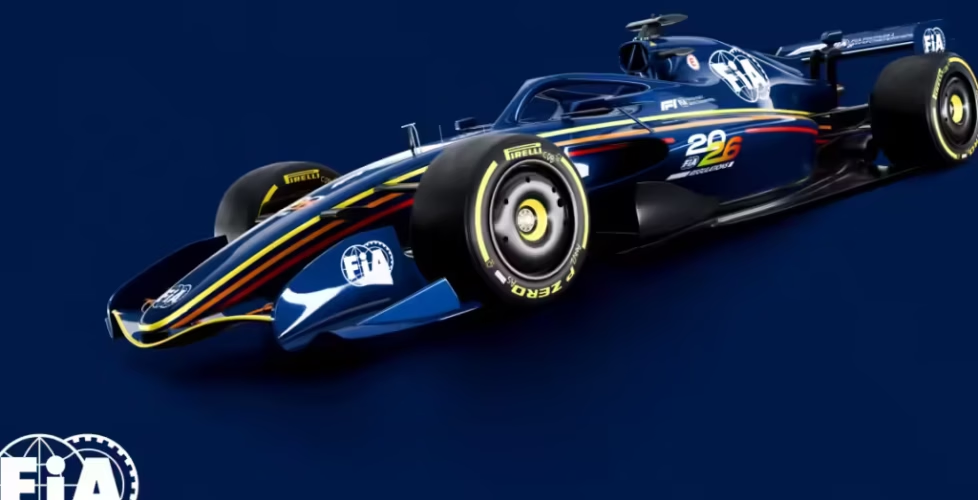
FIA Addresses Concerns Regarding 2026 Formula One Regulations
The concerns about the recently published Formula 1 rules for 2026 have been addressed by the Fédération Internationale de l’Automobile (FIA). The FIA, as the worldwide regulating organisation of motorsport, is responsible for maintaining the sport’s ongoing development while maintaining a balance between environmental, safety, and performance factors.
New Formula One Regulations for 2026 Announced
The FIA revealed the next rules on Thursday, promising a vehicle design with active aerodynamics and a new power unit that is more nimble. The first opinions from the F1 community have been varied, despite the enthusiasm and expectation around these upgrades. Concerns have been raised by drivers and team principals that the new vehicles may not meet the high performance requirements of the elite of racing.
Resolving the Issues
The director of the FIA with a single seat, Nikolas Tombazis, recognised these worries. He emphasised that the preliminary rules as they are now written on paper constitute the basis for the objections. Tombazis stressed that there would be much more fine-tuning and that these basic guidelines are just the beginning.
Expectations for Performance
James Vowles, the team principal for Williams, brought attention to a particular concern: owing to a significant decrease in downforce, the new cars could only be slightly quicker than the F2 vehicles already in competition. In response, Tombazis said that while the worries are legitimate, the laws were purposefully designed with low performance standards. Through cooperative team development, this approach enables little improvements in performance.
Gradual Enhancements and Adaptability
Tombazis reassured that if regulations are allowed to be more lax, then increasing downforce is not too difficult. In order to guarantee that the new F1 cars continue to perform better than those in lower-tier classes, such as F2, the FIA intends to raise the downforce levels. The regulatory framework will accommodate these modifications, with the goal of finalising the rules that include these improvements.
Future Developments and the Regulatory Process
By the end of the month, the World Motor Sport Council (WMSC) will receive the current draft of the rules for approval. Tombazis did point out that the regulatory procedure is continuing and that the teams are continuously consulted. Refinements based on these consultations will be included into the final draft of the rules, which is anticipated to be approved by December.
Implementation Schedule
Teams won’t start working on aerodynamics until the beginning of 2025 in accordance with the new rules. This schedule guarantees that teams have enough time to get used to the new regulations and offers room for future modifications. In order to ensure that the 2026 vehicles meet the standards for performance and innovation, the FIA is dedicated to closely collaborating with the teams to refine the rules.
Final Thoughts
The FIA has shown that they are committed to keeping Formula One (F1) as the top racing division by actively interacting with the teams and being willing to make changes to the rules. The FIA is sure that the 2026 rules will eventually improve the sport by striking a balance between the need for cutting-edge performance and the changing technical and environmental situation, even though the concerns highlighted are being taken seriously.
FIA’s 2026 Formula One Regulations FAQs
1. What are the primary modifications made to the Formula One rules for 2026?
A number of significant adjustments are made to the F1 rules for 2026, including: – A more nimble vehicle design.
Application of aerodynamics that is active.
- The launch of a new power module.
- A significant decrease in downforce to establish performance benchmarks cautiously at first.
2. Why are teams and drivers worried about the new rules?
The main reason for concern has been the assumption that the new vehicles’ decreased downforce would make them slower overall, particularly while cornering. There are concerns that the performance gap between the new F1 and F2 cars may not be that great.
- What steps is the FIA taking to resolve these issues?
The director of the FIA’s single seat, Nikolas Tombazis, recognised the worries but stressed that the present rules are just a draft. He gave his word that changes are planned and would be easy to execute with regulatory flexibility, with a focus on enhancing downforce.
4. When will the rules for 2026 be finalised?
By the end of June, the rules will be submitted for approval to the World Motor Sport Council (WMSC). Team consultations will be used to make final adjustments, and by December 2024, the final document should be approved.
5. When will teams begin creating vehicles in accordance with the new rules?
Beginning in early 2025, teams are permitted to begin aerodynamic work in accordance with the new rules. This schedule guarantees teams have enough time to adjust to the new regulations and allows for further improvements.
6. Will the new F1 vehicles outperform the F2 cars already in use?
No, the FIA is sure that the new F1 vehicles will continue to perform better than the F2 vehicles. The first cautious performance benchmarks are established to enable incremental advancements in teamwork.
7. What is the purpose of introducing active aerodynamics, and what does it mean?
Systems that may modify aerodynamic components in real-time to maximise performance in a variety of scenarios are referred to as active aerodynamics. They are being added to improve the vehicles’ efficiency and agility, which will improve their performance and flexibility during competitions.
8. What distinguishes the new power unit from the existing ones?
Although the new power unit’s exact specifications have not yet been made public, it is anticipated to have cutting-edge technology meant to increase sustainability and efficiency. It’s expected that hybrid systems and potentially other cutting-edge power sources will be the main emphasis.
9. What effect will these modifications have on the whole racing experience?
Performance, sustainability, and technical innovation are all factors that the FIA strives to balance. Even though the first adjustments may appear cautious, continuous enhancements will guarantee that racing is thrilling, competitive, and compliant with contemporary environmental and technical norms.
10. Where can I get the most recent information on the F1 rules for 2026?
Visit the official FIA website and pay attention to World Motor Sport Council releases for the most recent information. Keeping a watch on press releases from the FIA and F1 teams will also provide up-to-date information on rule changes.